We repair residential pressure regulators, checking valve size and access; Oakland International Airport, Paso Robles downtown, and Santa Monica Pier help orient our California service area.
Does California Plumbing Code, Title 24, Part 5 Apply to Water Pressure Repairs?
How Do California Code Rules Affect Pressure Repairs?
A weak shower or faucets that trickle during peak hours can point to a repair question as well as a code question. California’s plumbing requirements matter when work changes the system, but the right answer depends on the repair and the property.
We test before recommending work. Seasonal irrigation demand can coincide with lower neighborhood pressure, so note whether symptoms worsen when outdoor watering is underway.
Hard water, common in many California communities, can leave mineral deposits that gradually narrow flow paths. Exposed plumbing in mountain areas can also be stressed by freeze-thaw cycles; tell us if a pressure change followed a cold snap.
From homes near the Golden Gate Bridge to inland communities, local conditions vary. California’s Mediterranean climate brings wet winters and dry summers, which can affect access and repair timing.
Does Title 24, Part 5 Apply to Pressure Repairs?
Yes, California Plumbing Code, Title 24, Part 5 can apply to plumbing work performed in California, but the exact requirements depend on the repair and what the work changes. A like-for-like repair is not automatically the same as altering or extending a system, so the specific scope matters. Don’t assume every pressure complaint needs a permit or that code is irrelevant.
Our diagnosis starts with the symptom: a whole-house pressure drop, a weak shower, or one faucet that has slowed. We document what we find and explain the proposed work before proceeding.
A residential plumbing system includes supply piping and connected fixtures, so a repair should account for how the changed part fits into the system rather than treating a symptom in isolation. Near the California State Capitol in Sacramento, as elsewhere in the state, the applicable code and local permitting authority depend on the job and jurisdiction.
The Old Sacramento Waterfront is a reminder that buildings and infrastructure can have different histories; age alone doesn’t identify the cause of low pressure.
What Should Happen Before a Pressure Repair?
Start by identifying whether the problem affects one fixture or several. For a single slow faucet, a clogged aerator or fixture valve may be the local restriction; broad symptoms call for checking the supply and pressure-control components.
Our crew uses diagnosis not guesswork to narrow the cause before recommending a repair. A gauge reading can help show what the system is doing, but the result must be considered alongside the complaint and the installation.
The name Thomas Crapper is sometimes associated with the history of the British plumbing industry, but historical trivia does not diagnose a present-day pressure problem. What matters on site is the actual piping, valve condition, and symptom pattern.
California Plumbing Pros explains those findings in plain language and keeps work areas protected. For background on a sudden change affecting several fixtures, read what homeowners can check before calling a pro for sudden pressure loss.
Could Wildfire Conditions Affect Access or Diagnosis?
They can. Wildfire damage can affect water systems and service access, so if your property has had a disruption, tell the plumber what changed and when.
Damage or restricted access may alter what can be inspected during the first visit; don’t assume a pressure problem is confined to the house if the supply has also been affected. We separate what we can verify from what needs follow-up, then explain a practical repair path.
That distinction matters in places with varied building types and service histories, including the Anaheim Resort District, where property access and occupied spaces can affect how work is coordinated. Clean, documented workmanship means recording the relevant findings and leaving the work area orderly, not simply replacing a part and walking away. If a proposed repair changes plumbing beyond the immediate failed component, ask what code requirements and local approvals apply to that scope.
When Is a Homeowner Check Enough?
A simple observation is a reasonable first step: check whether one fixture or the whole home is affected, and note when the pressure changes. You can inspect an accessible faucet aerator if you’re comfortable doing so.
Stop there if the issue involves a main line, pressure-control equipment, leaks, or equipment that requires electrical work. Don’t adjust components just to force a stronger stream; an incorrect adjustment may mask the cause or create another problem.
Call a plumbing professional when several fixtures lose pressure, the change is sudden, or the repair would alter installed piping or equipment. California’s requirements turn on the work being done, so ask how the proposed scope relates to Title 24, Part 5 and whether the local authority requires a permit. We can test, describe the likely source, and discuss the repair before work proceeds.
Which Pressure Repair Fits the Code Question?
If several fixtures go weak at once, the right repair depends on the cause not just the code question. Start by distinguishing a fixture restriction from a supply or equipment problem; then confirm what the proposed work changes.
Near Disneyland Park in Anaheim, for example, a property’s access needs can make inspection planning important, while Downtown Los Angeles buildings may present different work conditions. Coastal fog that lingers on summer mornings can make outdoor inspection damp, so allow for safe access to exposed components.
Drought-related water-supply restrictions can also be relevant context when a neighborhood reports changing service conditions.
| Option | Best for | Key detail |
|---|---|---|
| Pressure regulator repair | Unstable or excessive pressure | Residential regulator connections are commonly 3/4 inch |
| Booster pump repair | Supply that cannot meet demand | A booster pump raises pressure when supply is inadequate |
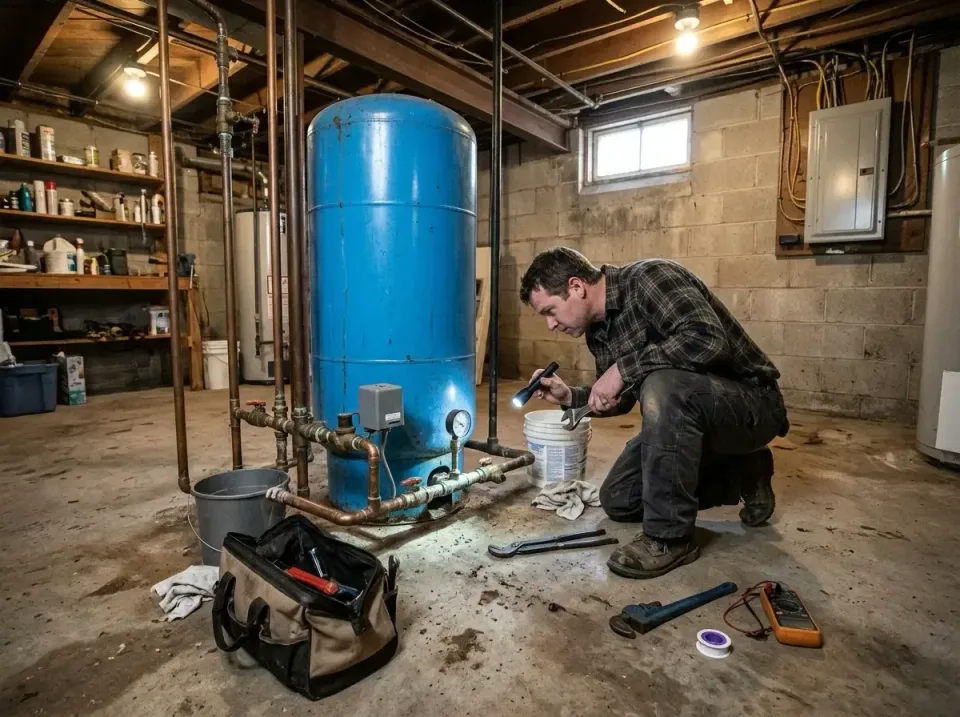
| Well pressure tank repair | Frequent well-pump cycling | Tanks are sized by drawdown capacity |
| Shower pressure troubleshooting | A weak shower stream | Compare fixture flow with the wider home |
Ask what testing supports the recommendation and whether the work scope requires local review.
What Pressure Gauge Detail Do Pros Check?
Pro tip: A faucet that performs poorly near the Golden Gate Bridge may have a fixture restriction, while a pressure complaint elsewhere in the house may point to the supply or regulator; compare the symptom across fixtures before choosing a repair. Inland valleys experience hotter summer temperatures, so customers may notice pressure changes during high-demand periods, but a temperature pattern alone does not prove the cause.
Rainfall varies widely by region and elevation, so do not use a rainy or dry week as a substitute for testing. A pressure gauge reading is useful only when we know whether water is flowing and what the customer was experiencing.
Common mistake: Treating one gauge reading as the whole diagnosis.
Common Questions About Low Water Pressure Repair in California
Does California Plumbing Code, Title 24, Part 5 Apply If I Only Replace a Pressure Valve?
Yes, California Plumbing Code, Title 24, Part 5 may apply to plumbing work, and whether a permit is needed depends on the valve work and local jurisdiction. Ask the contractor to explain the scope and check with the authority having jurisdiction before work begins.
How Much Does a Pressure Test Cost Before a California Code-Related Repair?
A pressure test is $75–$200, depending on access and diagnostic scope; gauge readings are measured in pounds per square inch. A written estimate should identify the test and any repair separately.
Can I Adjust a Pressure-Reducing Valve Myself If My Shower Is Weak?
You can first check whether the weak stream affects only one fixture, but leave regulator adjustment and diagnosis to a plumber if several fixtures are involved. California Plumbing Pros can test the system and explain whether the valve or another restriction is the likely cause.
Does a Low-Pressure Repair Need a Los Angeles Permit?
Confirm requirements with the Los Angeles Department of Building and Safety before work that alters plumbing, rather than assuming every repair has the same permit rule.
Could Faucet Aerator Cleaning Solve a Weak Shower or One Slow Faucet?
Faucet aerator cleaning can restore flow when debris at an aerator is the restriction, but it will not fix a whole-house supply problem. Coastal areas generally have mild temperature swings, while desert communities face prolonged summer heat; neither condition identifies the fault, so compare fixtures and request a test if pressure remains weak.
Get a Clear Repair Plan for California Code Questions
A pressure repair may involve California Plumbing Code, Title 24, Part 5, but the work scope determines what requirements apply. If one faucet is affected, start with its aerator or fixture valve; if pressure falls across several fixtures, have the supply and system components checked.
We coordinate access with facility teams when a property needs that planning, and we can discuss product specifications across borders when a project involves them. From the Big Sur coastline to communities near Balboa Park in San Diego, local access and property conditions can shape the inspection.
California’s coastal areas generally have mild temperature swings, but that does not replace a system check. For a measured assessment, contact California Plumbing Pros and ask about Water Pressure Testing.
Services Offered
Services We Offer in Los Angeles, CA
Explore related services available in Los Angeles, CA.
We repair residential booster pumps, including pump and control faults; typical repairs run $250–$900 depending on pump type and parts.
Water Pressure Testing compares static and flowing readings for homes and rental properties; typical testing runs $100–$250, depending on access and diagnostic scope.
We trace sudden whole-home pressure loss for California homeowners, checking supply lines and pressure equipment; repair scope and access determine the job price.
Shower Pressure Repair addresses weak shower flow, from showerhead buildup to fixture adjustments; typical repairs run $150–$500, depending on access and parts.
We diagnose weak hot-water flow at faucets and showers, checking heater connections and nearby piping; typical repairs run $150–$600, depending on access and parts.
Water Main Pressure Repair covers buried supply-line leaks and restrictions for homeowners and property managers; typical repairs run $500–$2,500, depending on excavation and pipe damage.
Clogged Pipe Pressure Repair clears flow restrictions in residential pipes; typical jobs run about $200–$1,200, depending on blockage location and pipe access.
Pressure tank repair covers residential well tanks, including air-charge and connection checks; typical repairs run $250–$600 depending on access and parts.
Water Filter Pressure Repair clears restricted housings and cartridge flow for California homeowners; typical jobs run $150–$600, depending on filter type and access.
We repair well pressure tanks for homeowners, checking tank air charge and switch settings; repair costs depend on tank size, parts, and access.
We repair residential well pumps, switches, and pressure controls; pump type, parts, and access shape the job. Typical repairs may run $300–$1,500.
Cities & Towns
Service Areas in Los Angeles
Select a city to find local low water pressure repair providers we cover in Los Angeles.
Cerritos, CA90703Vista, CA92083Santa Clarita, CA91350Valley Center, CA92082Altadena, CA91001Boron, CA93516San Dimas, CA91773Borrego Springs, CA92004Antelope, CA95843Menifee, CA92586Twentynine Palms, CA92278Westminster, CA92683Mission Viejo, CA92691Yucaipa, CA92399Anaheim, CA92806Tustin, CA92780South Pasadena, CA91030Glendale, CA91208Signal Hill, CA90755San Marcos, CA92096Rosemead, CA91770Oxnard, CA93030Santa Fe Springs, CA90670Carson, CA90745
Show all 300 cities
Encinitas, CA92024Topanga, CA90290Rancho Santa Fe, CA92067Diamond Bar, CA91765Apple Valley, CA92307Hesperia, CA92345Rowland Heights, CA91748Malibu, CA90265Santa Monica, CA90404Wrightwood, CA92397Carmichael, CA95608Mission Hills, CA93436Mojave, CA93501Rialto, CA92376Alhambra, CA91801Mather, CA95655Redlands, CA92374Goleta, CA93117Santee, CA92071La Canada Flintridge, CA91011Chino, CA91710Murrieta, CA92563Azusa, CA91010Alpine, CA91901Sierra Madre, CA91024Laguna Hills, CA92653
Get a Quote
Get a Low Water Pressure Repair Quote in Los Angeles, CA
Share job details below or call our team directly. Phone: (877) 773-0781